Choosing between a suitcase and a backpack depends less on travel style labels and more on the actual trip. Picture a station with narrow stairs, a cobbled street, or a hotel room with barely enough floor space. Wheels glide beautifully on smooth pavement. They become awkward when the route turns uneven. A backpack keeps both hands free, but its weight rests on your shoulders. Small trade-offs. They add up.
Travel writer and guide Rick Steves is often associated with this practical rule: “You can’t travel heavy, happy, and cheap. Pick two.” It is a useful reminder to think about luggage weight, comfort, and cost together. To understand how to choose between suitcase and backpack, compare your route, trip length, packing needs, and physical comfort. A wheeled case may suit airport-to-hotel trips and travelers carrying heavier items. A backpack may work better for frequent transfers, stairs, and compact accommodation. Neither option guarantees an easy journey. I once underestimated how tiring a loaded backpack could feel after a long day; the right choice can still feel wrong when overpacked. Consider trying each bag with your expected load before you leave. The best fit is the one you can handle comfortably, from the first platform to the final check-in.
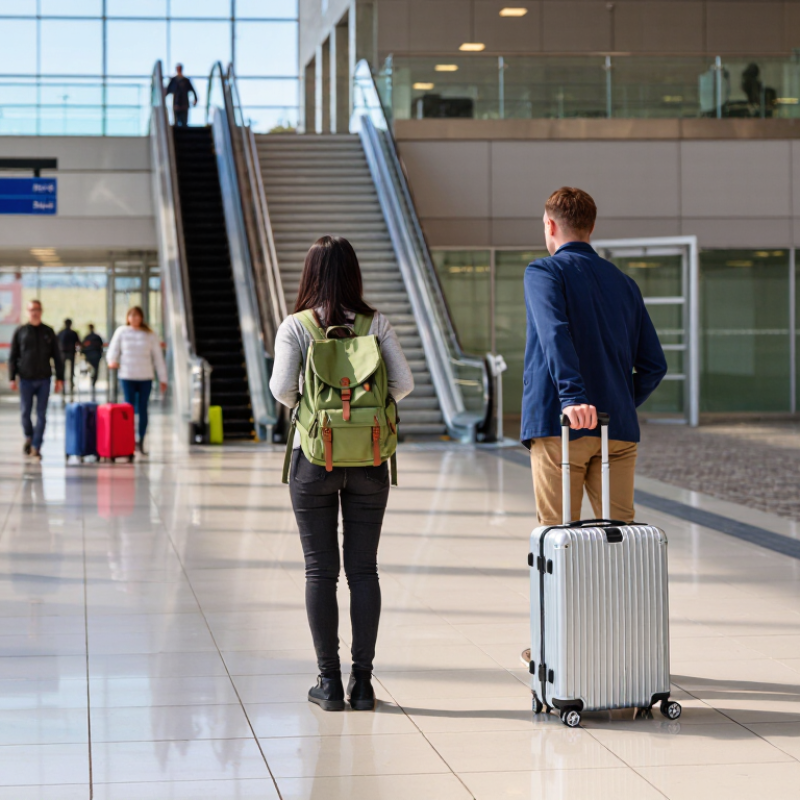
Why Choose a Suitcase or Backpack for Travel?
How Suitcases and Backpacks Differ in Structure, Capacity, and Mobility
A suitcase usually has a firm frame, a broad opening, and separate compartments. It keeps folded clothes orderly and protects contents from light knocks. Its shape, however, does not shrink when half-empty. A backpack uses flexible fabric and shoulder straps, often with pockets that make small items easy to reach. Compression straps can reduce bulk, but a tightly packed bag may become awkward to open. Capacity depends on the design and how you pack, not just the label.
Wheels make a suitcase easy to roll through smooth terminals, but stairs, uneven sidewalks, and crowded buses can slow it down. A backpack leaves your hands free and handles those obstacles better, though weight presses directly on your shoulders. Fit matters. A 2024 SITA Baggage IT Insights report recorded 6.9 mishandled bags per 1,000 passengers worldwide in 2023. That figure does not compare bag types, but it is a reminder to keep valuables close and check your bag’s route and handling needs. Not always an easy choice.
Tips: Test your packed bag on stairs and over a rough pavement before leaving. Put heavier items close to your back in a backpack, or low near the wheels in a suitcase. Check airline size and weight limits; a roomy bag can still be inconvenient.
A suitcase has a firm frame, a broad opening, and separate compartments. It keeps folded clothes orderly. A backpack uses flexible fabric and shoulder straps, with pockets for small items.
A backpack usually handles stairs and rough pavement better, and keeps your hands free. A wheeled suitcase rolls smoothly through terminals but can be awkward on steps. Trade-offs matter.
Capacity depends on the bag’s design and how you pack it. Compression straps can reduce a backpack’s bulk, but tight packing may make it harder to open. A suitcase keeps its shape, even when half-empty.
A commonly cited cabin-baggage reference is about 56 × 45 × 25 cm, including wheels and handles. It is not a guarantee of overhead-bin space. Check your airline’s current size and weight limits.
Bulging pockets, handles, and side compartments can push a bag over the limit. Measure it when packed, not just when empty. I still forget the side pocket sometimes.
It describes a system-wide rate recorded in 2023. It is not a 6.9 percent chance for one traveler, and it does not compare backpacks with suitcases. Small number. Still, a delayed bag can leave you waiting by an empty carousel.
Keep essentials such as a charger and a change of clothes in your cabin bag, if your allowance permits. Keep valuables with you. Easy to miss.
Test your packed bag on stairs and rough pavement before leaving. Place heavier items close to your back in a backpack, or low near the wheels in a suitcase. I would not rely on one rule for every trip.
Choosing between a suitcase and a backpack depends on how you travel and what you need to carry. Suitcases usually offer a structured shape, organized compartments, and better protection for packed items, while backpacks provide hands-free mobility and can be easier to manage on stairs, uneven paths, or crowded transit. Their capacity and comfort vary, so consider both the load you expect to carry and how often you will need to move it.
Before choosing, check your airline’s cabin-baggage size and weight limits, since general guidance may not match every carrier’s rules. A 2023 industry report recorded 6.9 mishandled bags per 1,000 passengers, underscoring the value of keeping essential items accessible. For shorter trips, smooth routes, or heavier packing, a suitcase may be practical; for longer journeys involving varied terrain and frequent transfers, a backpack may suit you better. To decide how to choose between suitcase and backpack, weigh trip length, transit, load, access, and protection needs together.

 ESRT Life