How to maximize space in a suitcase is not about forcing more clothes into less room. It is about making deliberate choices before the zipper closes. SITA’s 2024 Baggage IT Insights report recorded 6.9 mishandled bags per 1,000 passengers in 2023. That figure makes organization more than a convenience. It becomes practical travel protection.
Hitha Palepu, author of How to Pack, describes packing as “a skill, not a talent.” Her advice supports a simple principle: repeatable systems beat last-minute stuffing. This guide applies that idea through ten space-saving methods, including wardrobe planning, compression, rolling, and strategic layering. A lightweight shirt can fill a narrow corner. Shoes can hold socks, belts, or chargers. Toiletries can fit inside a transparent pouch instead of scattered pockets.
Measure twice.
Still, no method works perfectly for every traveler. Rolling can reduce creases for casual clothing, but folding may suit structured garments better. Compression bags create room, yet they can encourage overpacking. I sometimes carry “just one more” item and regret it at the airport. That small mistake matters when cabin limits are strict.
The goal is not an impressively full suitcase. It is a balanced case that closes easily, stays organized, and leaves space for real-world changes. These techniques combine professional packing principles with practical travel experience. Use them as a flexible system, not a rigid rulebook.
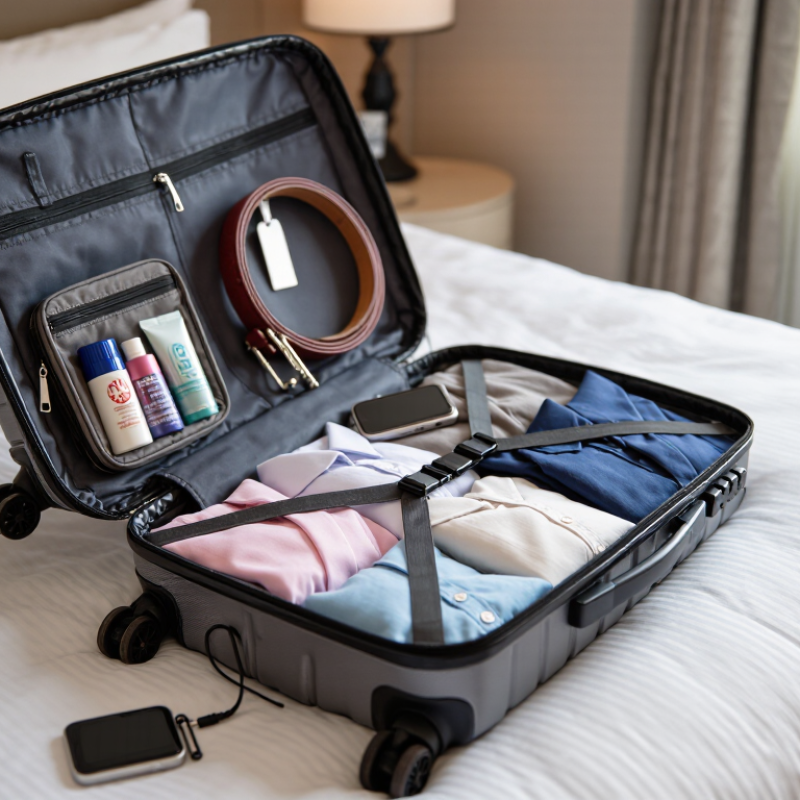
Before packing, measure your suitcase’s usable space, not just its outside dimensions. Lining, wheels, and handles can reduce capacity more than expected. I place everything on the bed first, then compare the pile with the suitcase’s empty interior. This simple test exposes unnecessary choices quickly.
Think in outfits, not individual items. Choose two tops for each pair of trousers, one practical jacket, and shoes that match several outfits. Roll soft clothing, but fold structured pieces to prevent wasted corners. Fill shoes with socks, cables, or small toiletries. A small pouch keeps loose items from disappearing between layers.
Write every item on a short list.
Remove anything with only one possible use.
Check the weather and planned activities before adding extras.
Leave a little space for laundry or unexpected purchases.
My first packing attempt is rarely perfect; I often discover that a second review removes three forgotten “essentials.”
Place heavy items near the suitcase’s wheels for better balance.
Keep documents, medication, and fragile necessities in an accessible personal bag, rather than burying them under clothing.
Selecting the right suitcase begins with your packing requirements, not its appearance. A two-day business trip needs a compact case with a structured compartment for shirts and documents. A ten-day family holiday may require expandable storage, stronger wheels, and separate laundry space. Measure the case, including wheels and handles, because airlines often assess external dimensions. Allowance rules vary between routes and carriers. Check them before purchasing.
SITA’s Baggage IT Insights 2024 reported 5.8 mishandled bags per 1,000 passengers in 2023.
That figure supports choosing a suitcase with a clear identification card, durable construction, and secure closures. A lightweight design can increase usable capacity, but very thin shells may disappoint after repeated handling. I have found that four smooth-rolling wheels save effort in crowded terminals, although they can reduce internal space slightly. Small trade-offs matter.
IATA’s 2024 Global Passenger Survey showed that passengers increasingly expect smoother, more digital travel experiences. Choose a suitcase that supports this routine: a visible label, an accessible document pocket, and a stable handle for quick movement.
Do not select the largest case automatically. Overpacking creates wrinkles, difficult lifting, and avoidable fees. Test the empty suitcase with one hand. Then place a folded jacket inside and check whether the zipper closes without pressure.
Packing efficiently starts with choosing the right method for each garment. I fold structured shirts and trousers along their natural seams. This prevents sharp creases and protects collars. Soft T-shirts, sleepwear, and underwear work better when rolled tightly. Rolling removes empty spaces between layers. It also makes small items easier to find. Keep rolls even, not oversized. Bulky rolls waste room.
For mixed clothing, I use the bundle method. I place a jacket or trousers flat, then layer shirts and softer pieces across the center. Sleeves and trouser legs fold inward around the stack. The result is one compact package with fewer hard folds. It also reduces deep wrinkles. Place the bundle in the suitcase’s center. Add socks inside shoes or corners. Small gaps matter.
Use a firm, steady touch. Over-compressing clothing can create stubborn creases and strain suitcase zippers. I still misjudge how much fabric one sweater needs. That mistake is useful. It reminds me to test the bundle before packing the next layer. Keep heavier items near the suitcase wheels. Place rolled clothes around the bundle for support. Leave a little space for unpacking. A packed case should close without force.
Top 10 Ways to Maximize Space in a Suitcase
Shoes are hidden storage, not dead weight. Pack socks, belts, chargers, and folded underwear inside each shoe. Use a thin bag first, especially for items touching the sole. IATA cabin guidance commonly limits carry-on dimensions, so every pocket matters. A shoe can hold several small essentials without adding bulk.
Fill the gaps around footwear. Slide rolled T-shirts beside the heels, and place underwear along the suitcase edges. Tuck a swimsuit into the space beneath the handle rails. These narrow areas often remain unused. I still overpack “just in case” items. That habit needs scrutiny.
SITA’s 2024 Baggage IT Insights report recorded 6.9 mishandled bags per 1,000 passengers in 2023, down from 7.6 in 2022. Keeping medication, documents, and one change of clothes in accessible carry-on space remains practical. IATA’s 2024 Global Passenger Survey reported that 70% of passengers would share passport information before reaching the airport. Store travel documents in a slim inner pocket, not inside a shoe. Pack by access frequency, not personal preference. Heavy shoes belong near the suitcase wheels. Delicate items should occupy the protected center. My first packing attempt usually looks efficient, but reopening it often reveals wasted gaps.
A well-organized suitcase saves space and reduces stress at security checks or hotel arrivals. I place heavier items near the wheels, where the case stays balanced and stable. Compartments should have clear jobs: clothing, footwear, toiletries, documents, and small accessories. This simple separation keeps items visible and prevents repeated unpacking.
Tips: Roll soft clothing tightly, then place it in the largest compartment. Use slim pouches for socks, chargers, and undergarments. Keep one empty pouch for laundry. Store shoes in separate bags, with socks inside them. Put liquids upright in a sealed, transparent bag. Keep travel documents in an outer pocket, but avoid overfilling it.
I leave a narrow space between sections for last-minute items. That gap is useful. A folded scarf or lightweight jacket can fill it later. I also pack outfits together instead of grouping every shirt separately. This makes morning dressing faster and limits unnecessary digging. However, my method is not perfect. Rolled clothes can wrinkle, especially linen or thin cotton. For those pieces, I fold them flat on top. Compression can save room, but excessive pressure makes the case difficult to close and may damage delicate fabric. Before leaving, I open every compartment once. If I cannot find an item within seconds, the arrangement needs work.
Put socks, belts, chargers, or folded underwear inside each shoe. Use a thin bag before packing items near the sole.
Place heavy shoes near the suitcase wheels. This keeps the case balanced and easier to move through a station or hotel lobby.
Slide rolled shirts beside shoe heels. Tuck a swimsuit beneath handle rails and underwear along the suitcase edges. Small gaps matter.
Give each section one job: clothing, shoes, toiletries, documents, or accessories. Clear sections reduce searching and repeated unpacking.
Use slim pouches for socks, chargers, and underwear. Keep documents in a slim outer pocket, but do not overfill it.
Store liquids upright inside a sealed, transparent bag. Keep toiletries together so one leaking bottle does not wet the whole suitcase.
Roll soft shirts and casual clothing tightly. Fold linen or thin cotton flat because rolling may create stubborn wrinkles.
Compression saves space, but excessive pressure can damage delicate fabric. A suitcase that barely closes is not packed efficiently.
Keep medication, documents, and one clean outfit in accessible carry-on space. You may need them before reaching your destination.
Open every compartment before leaving. If an item takes more than a few seconds to find, the layout needs revision. My method sometimes fails.
Learning how to maximize space in a suitcase starts with assessing your available room and choosing only the items you truly need. Select luggage that suits the length and purpose of your trip, since the right size can prevent both overpacking and wasted space. Before packing, plan outfits carefully and remove anything that does not serve a clear purpose.
To make the most of every section, fold structured garments, roll flexible clothing, and bundle small groups of items together to reduce bulk. Place socks, belts, chargers, or other small essentials inside shoes, and use empty corners and gaps between larger items. Keep similar belongings organized in separate compartments or pouches so everything remains compact, visible, and easy to reach. With thoughtful planning and efficient arrangement, your suitcase can hold more while staying orderly and manageable.

ESRT Life